Book Review Wednesday (on Thursday, oops!)


Shop Indie Bookstores


<!–
/* Font Definitions */
@font-face
{font-family:”Times New Roman”;
panose-1:0 2 2 6 3 5 4 5 2 3;
mso-font-charset:0;
mso-generic-font-family:auto;
mso-font-pitch:variable;
mso-font-signature:50331648 0 0 0 1 0;}
/* Style Definitions */
p.MsoNormal, li.MsoNormal, div.MsoNormal
{mso-style-parent:””;
margin:0in;
margin-bottom:.0001pt;
mso-pagination:widow-orphan;
font-size:12.0pt;
font-family:”Times New Roman”;}
table.MsoNormalTable
{mso-style-parent:””;
font-size:10.0pt;
font-family:”Times New Roman”;}
@page Section1
{size:8.5in 11.0in;
margin:1.0in 1.0in 1.0in 1.0in;
mso-header-margin:28.1pt;
mso-footer-margin:28.1pt;
mso-paper-source:0;}
div.Section1
{page:Section1;}
–>

Sidman, Joyce and Zagarenski, Pamela. This Is Just To Say. Boston: Houghton Mifflin Co, 2007.

Perhaps it is fitting that I begin this post with an apology. I’m so sorry that I missed Wednesday. It startled me, then melted away like the first snow. (Responses welcomed in the comments.)

In the first section of Joyce Sidman’s poetry collection, This Is Just To Say, fictitious sixth grade students and their teacher are inspired to write poetic apologies after reading William Carlos William’s (often anthologized) “This Is Just To Say.” In the second half of the book, those they have injured answer with poetic responses.

The whimsical collage illustrations by Pamela Zagarenski fit the collection perfectly. The student introduction tells us that a student and the art teacher created the images and Zagarenski’s minimalist drawing approach makes this believable. I especially applaud her use of school related papers in the images. Houghton Mifflin editors chose the same illustrator for Sidman’s, Red Sings From Treetops, for her wonderful ability to create fantastical settings.

The subject matter of these poems is enough to evoke emotion in the reader: a dying dog, a hurt sibling, an absent father, a missing class pet. However, some of the apologies are lighter: a stolen jelly donut or brownie, a hard hit in dodge ball, a loved school statue.

I suppose I am a little bit of a poetry traditionalist but I thought that the poems that employed more formal devices were the most effective. “The Black Spot” uses an imbedded dot of pencil lead as a metaphor for the simmering anger between siblings. “Dodge Ball Kings” a poem in two voices that captures the excitement and energy of the boys with onomatopoeias. “Haiku for Carmen” which follows the traditional 5-7-5 syllable form. “What Girls Want” in which the student poet uses a series of metaphors and parallel phrasing that builds to a final contradictory line that really packs the emotional punch of the poem.

When the poems are less formal in their organization the collection lags. Many of the poems are prose poems and I felt that the line breaks were somewhat arbitrary. Many of them could have used more condensed language and the line breaks could have been better chosen to create more impact. If you read some of these poems aloud the listener might think you were just reading a paragraph.

That said, I highly recommend this book for any middle grade reader. By immersing the reader in the characters that people Mrs. Merz sixth grade class, Ms. Sidman makes each of these situations relevant and readable to a child audience. If children visit her website, they can hear Ms. Sidman reading her poems.

The book, published in 2007, has won many awards including:

Claudia Lewis Poetry Award

Cybils Poetry Award

Lee Bennett Hopkins Poetry Award Honor Book

IRA Teacher’s Choice Book

Texas Bluebonnet Award Nomination

New York Public Library’s "100 Titles for Reading and Sharing"

School Library Journal Best Book of the Year

Book Links Lasting Connection Book

If you are looking in your library for This Is Just To Say, it is probably housed in the juvenille poetry section where some of the most wonderful and overlooked books are just waiting to be rediscovered.

Book Review Wednesday: There Come A Soldier


Shop Indie Bookstores

Normal
0
0
1
373
2129
17
4
2614
11.1282

0

0
0

Mercer, Peggy. There Come A Soldier. Illus.Ron Mazellan. New York: Handprint Books, 2007,


Peggy Mercer contacted me last week to suggest her book There Come A Soldier, for Book Review Wednesday. I’m so glad she did.


Peggy’s book tells the story of a father who fights in World War II. He draws his strength from childhood memories growing up in rural Georgia. When he learns to be a paratrooper, he remembers times jumping out of the hayloft “although it took a right smart of coaxing.” When he has to hold “still as a tombstone,” he remembers the time he was treed by a bear.


The author’s regional storytelling voice rings true throughout alternating scenes. In one scene the reader learns about father’s calls to service, training or mission in the military. Next, the author flashes back to Georgia and how father prepared for the service as a boy. The text is longer than what most editors are acquiring these days and I am so glad. The writing is lyrical and at times melancholy. Tension grips the reader in the middle of the book and propels him, along with the alternating flashbacks, towards the conclusion of the story which delivers hope and courage for young readers.


The illustrations by Ron Mazellan are painterly and evocative of Norman Rockwell. I say this with some reluctance. I don’t want you to think that they are campy or photorealistic. Instead, I mean that the reader is treated to an artist skilled in the human figure and portraiture. The painter’s signature technique is the use of white to dapple and fog portions of the images creating movement and emotion. Mazellan uses the darkest values to contrast with the white, providing depth of space and feeling.


There are no notes about the medium so I’m just giving it my best guess. Originally I thought the images were oil paintings as the under painting peaks through and seems to be mixed wet on wet. However, some of images are more translucent almost like watercolor. In these images the viewer is treated to remnants of the gestural charcoal under drawing. Both acrylics and gouache could be the medium used in this dynamic way.


When she contacted me, Peggy Mercer probably didn’t know that I’m a Navy spouse but that really doesn’t matter. There Come A Soldier is less a book about the military or war and much more a book about the bravery and determination it takes to serve. At the core of any service is a love and respect for nation.  This book is about how our past friendships, connections, and experiences are forged out of sturdy stuff. How these links encircle us for our whole lives. As we approach Thanksgiving, this book is an excellent discussion starter of what we are thankful for and how we can serve others.


Book Review Wednesday: Where Am I Sleeping Tonight?


Click the image for Boulden Publishing.


<!–
/* Font Definitions */
@font-face
{font-family:”Times New Roman”;
panose-1:0 2 2 6 3 5 4 5 2 3;
mso-font-charset:0;
mso-generic-font-family:auto;
mso-font-pitch:variable;
mso-font-signature:50331648 0 0 0 1 0;}
/* Style Definitions */
p.MsoNormal, li.MsoNormal, div.MsoNormal
{mso-style-parent:””;
margin:0in;
margin-bottom:.0001pt;
mso-pagination:widow-orphan;
font-size:12.0pt;
font-family:”Times New Roman”;}
table.MsoNormalTable
{mso-style-parent:””;
font-size:10.0pt;
font-family:”Times New Roman”;}
@page Section1
{size:8.5in 11.0in;
margin:1.0in 1.25in 1.0in 1.25in;
mso-header-margin:.5in;
mso-footer-margin:.5in;
mso-paper-source:0;}
div.Section1
{page:Section1;}
–>

Ekster, Carol Gordon and Sue Rama’. Where Am I Sleeping Tonight?: A Story of Divorce. Weaverville, CA: Boulden Publishing, 2008.


<!–
/* Font Definitions */
@font-face
{font-family:”Times New Roman”;
panose-1:0 2 2 6 3 5 4 5 2 3;
mso-font-charset:0;
mso-generic-font-family:auto;
mso-font-pitch:variable;
mso-font-signature:50331648 0 0 0 1 0;}
/* Style Definitions */
p.MsoNormal, li.MsoNormal, div.MsoNormal
{mso-style-parent:””;
margin:0in;
margin-bottom:.0001pt;
mso-pagination:widow-orphan;
font-size:12.0pt;
font-family:”Times New Roman”;}
table.MsoNormalTable
{mso-style-parent:””;
font-size:10.0pt;
font-family:”Times New Roman”;}
@page Section1
{size:8.5in 11.0in;
margin:1.0in 1.0in 1.0in 1.0in;
mso-header-margin:28.1pt;
mso-footer-margin:28.1pt;
mso-paper-source:0;}
div.Section1
{page:Section1;}
–><br /Ekster, Carol Gordon and Sue Rama’.

Carol Gordon Ekster, an award-winning educator, recently retired from teaching. Where Am I Sleeping Tonight? A Story of Divorce, is her first book for children. The story grew out of Carol’s 35 years of watching many fourth grade students muddle through the side effects of joint custody.

Where Am I Sleeping Tonight? opens with an engaging scene of the two brothers waking up, confused about if they are at Mom or Dad’s home. The book is told from the POV of the older fourth grade brother, Mark, and the sentence structure is appropriate for independent readers. The book is probably best for educators and counselors who want to use the book as discussion starter.

For Mark, making sure he has everything organized for school is a problem. This is an issue that will ring true for children regardless of their family situation. It may be helpful for adults to stop reading around page 16 before Mark solves his problem. This would be a good time to talk about Mark’s situation and ask the class for their ideas. Brainstorming possible solutions would keep the students engaged through the book to see if Mark solved the problem the way that they suggested.

As concept books sometime do, this book has its share of didactic moments that come from adult word choice, and telling instead of showing, “I set a goal to be more responsible” (Ekster 8) or “The class has heard all about the importance of making lists and being organized since the first day of school” (Ekster 18). However, Carol also has some nice imagery, “But my lips stay sealed, tighter than a zipped up baggy” (Ekster 10) and, regarding his Mother’s computer limit, “It’s like she has a timer in her brain” (Ekster 13).

The book is published by the educational publishing house Boulden Publishing who chose Sue Rama’ as the illustrator. You may know Sue from her delightful illustrations in Linda Sue Park’s, Yum! Yuk! She also won the Tomie de Paola Award for Illustration from SCBWI. Sue uses what looks like pen and ink, water-soluble crayon, and watercolor to create wonderful textures and flowing gestural line. Spot illustrations extend and reinforce the story.

Ten on Friday

This has been a busy week so I guess we’ll get right down to it:
1. I went to the Yarmouth Art Festival opening last night and was amazed by the showing. St. Bartholomew’s church in Yarmouth was packed with art lovers. The show will be up through Saturday if you’d like to see it. Also, you can preview the works in the online catalog.
2. I had a great visit with my parents who came up to leaf peep this past week. They enjoyed the maples and the grandchildren and gave hubby and I chance to go out on the town for our…
3. Sixteenth Anniversary! Every year is better than the last. How long have you been married?
4. My son I. tried out for travel basketball and didn’t make it. There were enough kiddos there for two teams but they could only have one. It got me thinking that the kids who DID make it, are automatically the Varsity team for highschool. That’s it. Decided in 5th grade. The kids who made the team get better coaching, a team with more skillful  team members to learn from, and more experience with challenging games. Of course the 5th grade travel team becomes the 6th grade travel team, and the A-team in Jr. High and then high school. What a shame we don’t give all kids the chance to succeed. (This sports situation is of course true for music and academics as well.)
5. I did not get an interview for the teaching job I applied for.
6. Had to ask for an extension on my MFA packet because things have been so busy. Must complete.
7. If you have a MG or Picture book fiction or nonfiction) coming out this year, I’d love to review it. Tell me in the comments or contact me at anna at annajboll.com
8. Must work on image for the Maine Illustrators’ Collective Classics Reimagined show!
9.Brrr… I think winter is right around the corner. Windy and cold enough to turn on the heat.
10. Looking at puppies.

Book Review Wednesday: Pennies for Elephants


Shop Indie Bookstores


<!–
/* Font Definitions */
@font-face
{font-family:”Times New Roman”;
panose-1:0 2 2 6 3 5 4 5 2 3;
mso-font-charset:0;
mso-generic-font-family:auto;
mso-font-pitch:variable;
mso-font-signature:50331648 0 0 0 1 0;}
/* Style Definitions */
p.MsoNormal, li.MsoNormal, div.MsoNormal
{mso-style-parent:””;
margin:0in;
margin-bottom:.0001pt;
mso-pagination:widow-orphan;
font-size:12.0pt;
font-family:”Times New Roman”;}
table.MsoNormalTable
{mso-style-parent:””;
font-size:10.0pt;
font-family:”Times New Roman”;}
@page Section1
{size:8.5in 11.0in;
margin:1.0in 1.0in 1.0in 1.0in;
mso-header-margin:28.1pt;
mso-footer-margin:28.1pt;
mso-paper-source:0;}
div.Section1
{page:Section1;}
–>

Judge, Lita. Pennies for Elephants. Hyperion. New York, 2009.

In the spirit of full disclosure, I should tell you that Lita Judge is a dear friend who I met when she was just starting in the world of children’s book illustration. In the following years, she illustrated covers, and picture books written by others. Most recently she has had a string of amazing, award winning picture books published (see awards listed here) that she both wrote and illustrated. Lita comes from a background of fine art which is crystal clear from her command of color and composition. She also comes from a science background and knows how to research a subject. Pennies for Elephants, shows-off Lita’s command of research and painting technique.

Pennies for Elephants is based on the true story of the children of Boston in 1914 who purchased three elephants for the Franklin Park Zoo. The story follows Dorothy and her brother Henry who earn and save pennies, nickels, and dimes to help make the purchase of the elephants a reality.

One of the most interesting editorial and design decisions for the book is the use of newspaper clippings to update the reader on the fundraising developments and provide information about the sale of the three elephants. These bits of newspaper are masterfully painted gray scale reproductions of the Boston Post by the author. This is where Lita’s research really shines. The newspaper clippings throughout the book and on the endpapers contain wonderful old ads (Children’s 49¢ rompers at 29¢, The Grant Car $495) that pull us right into Boston at the turn of the century.

The reader is immersed in setting and mood through the vibrant full color watercolors of Dorothy, Henry and their neighbors as they navigate Boston and the purchase of the elephants. I know that as reference for the people, Lita had a costume party for local kids in her New Hampshire community. The cityscapes reveal Lita’s research of clothing, style, automobiles and transportation, economics, and architecture.

The prose, told from Dorothy’s point of view is well written and engaging. While the text in the news clippings adds to the content, I found that while reading the book aloud, the clippings sometimes hindered the flow of the story.

The book recently received the 2009 New Hampshire Literary Awards as an Outstanding Work of Children’s Literature. Pennies for Elephants, like Lita’s One Thousand Tracings, and the newly released Yellowstone Moran, is a wonderful example of a literary nonfiction for children. Teachers and parents should make sure to visit the Pennies for Elephants webpage with young readers for wonderful activities, a book trailer with a Scott Joplin soundtrack, and old photographs from the era.

Thank you for such wonderful book, Lita!

Book Review Wednesday: Kittens and Wombats, Oh my!

And now for a quick update in book review land… I’ve reviewed two books this week. However, this is the third week I’ve written book reviews and while I’m enjoying it and keeping up, my other work (critical essays and my novel for my MFA program) is falling behind. Therefore, I’ve decided that each week I’ll only do one review and it will either be a picture book or a book for middle grade kiddos. I’ll try to alternate but I don’t want to promise anything.


Shop Indie Bookstores

Newbery, Linda. Illo: Rayner, Catherine. Posy. Atheneum Books for Young Readers. New York, 2008.

Posy is a delightful picture book for the youngest children in your life. Linda Newbery’s sparse, rhyming text describes different situations that Posy the kitten gets into. “She’s a whiskers wiper, crayon swiper…”

Catherine Rayner has created a sweet-faced kitten to embody the text. The mixed media illustrations have a lovely texture. Heavily applied, metallic, acrylic paint makes up Posy’s fur and is paired with a fluid India ink line that captures the playful gestures of the kitten. The design of the book is simple and classic with a brown serif font and plenty of white space.

This is one of those books that, if it was picked off the slush pile, an editor might call “slight.” However the author’s history as an award-winning novelist probably helped make this manuscript into a book. Young children don’t always need complex and they don’t always need story, sometimes play: word play, and image play is enough. This is one book that your toddler will ask for over and over and you will be happy to oblige.


Shop Indie Bookstores

French, Jackie. Illo: Whatley, Bruce. How to Scratch a Wombat: where to find it…What to feed it…Why it sleeps all day. Clarion Books. New York, 2009.

How to Scratch a Wombat: where to find it…What to feed it…Why it sleeps all day is the perfect book for all of the animal lovers and “infokids” out there. Infokids like to find out how, and why, and they hang out in the nonfiction section of the library. While the book is a republication of an Australian edition published by Harper Collins in 2005, this edition features a humorous word list in the beginning so that you can translate between the Australian bum, pong, rubbish, scat, and torch to the American bottom, stink, trash, dung, and flashlight.

The book keeps kids reading and laughing with funny sidebars: “Are you a wombat?” and “Who’s the greatest- you or a wombat?” French has made her home on the edge of the bush in New South Wales and she intersperses nimbly written information about wombats with wonderful stories of the personal relationships she has had with these wild creatures who live around her home.

If your kiddos are anything like mine, they will be acting like wombats for days, trying to bite each other on the bum and head butting you in the stomach. Enjoy!

Book Review Wednesday


Shop Indie Bookstores

I am thrilled to review fellow Maine illustrator, Chris Van Dusen’s, new book The Circus Ship. You may already know Chris from his illustrations of Kate DiCamillo’s, Mercy books. He is also the author of the rhyming Mr. Magee books, and If I Built a Car. I happen to know that Chris did some circus posters for Barnum early in his career. The story of The Circus Ship is based on a true story and is also told in rhyme. When the mean and selfish Mr. Paine, the circus owner, runs into bad weather while transporting the circus off the cost of Maine, he abandons the animals and saves himself. The animals, all bedraggled, end up on an island of Mainers not too thrilled with their new guests. A heroic act by the tiger endears the animals to the island residents who then cleverly fool Mr. Paine so the animals can safely stay with them.

The illustrations for this book are so lush and vibrant that you will be mesmerized by each spread. Incredible sunrises with gradients as smooth as silk will have you reaching for your sunglasses. This is one good reason to read this book with a child who will nudge you after a few minutes and remind you to turn the page. The other good reason is to share the intense emotions with some one you love. From Mr. Paine’s yellow toothed screams, to the weary and worried expressions on the animals’ faces, to the look of surprise and relief of the island folk when one of their own is saved, Chris Van Dusen connects with the core of the reader/viewer. Finally, you will need a small friend to help you find all the animals when Mr. Paine comes to town to claim them.

Chris is an expert of exaggerated angle and point of view. If you are a Van Dusen fan like me, you may remember the impossibly large waterfall in Camping Spree With Mr. Magee. In Circus Ship, when the ship carrying the animals crashes, Chris puts the viewer in the middle of the action. Mr. Paine and the circus animals are propelled overboard and right into the reader’s lap. (click to see this image on Chris’ blog) The reader is treated to this in-your-lap 3-D action in the image of the tiger leaping from the flames and when Mr. Paine strides into town to claim his animals. Both times, Chris uses elongation so that the subject of the illustration straddles the spread creating movement and tension for the reader.

As with many beautiful books that feel like a work of art, this one is published by Candlewick and includes many lovely design elements. The end papers are a lovely two-toned gold stripe that mimic the tents of the big top. The book starts right after the title page with a lush spread and the front matter is in the back. The back matter page contains an author’s note that let’s us know more about sadder true story that sparked The Circus Ship, the sinking of the the Royal Tar in 1836.

On the flap text, Chris says, "I’ve focused on light sources and textures in the artwork for this story– on details like paint peeling off the clapboards of the houses. This makes the book more complex and richer overall than my previous work." The reader is the richer for The Circus Ship. Congratulations, Chris!


Shop Indie Bookstores


<!–
/* Font Definitions */
@font-face
{font-family:”Times New Roman”;
panose-1:0 2 2 6 3 5 4 5 2 3;
mso-font-charset:0;
mso-generic-font-family:auto;
mso-font-pitch:variable;
mso-font-signature:50331648 0 0 0 1 0;}
/* Style Definitions */
p.MsoNormal, li.MsoNormal, div.MsoNormal
{mso-style-parent:””;
margin:0in;
margin-bottom:.0001pt;
mso-pagination:widow-orphan;
font-size:12.0pt;
font-family:”Times New Roman”;}
table.MsoNormalTable
{mso-style-parent:””;
font-size:10.0pt;
font-family:”Times New Roman”;}
@page Section1
{size:8.5in 11.0in;
margin:1.0in 1.25in 1.0in 1.25in;
mso-header-margin:.5in;
mso-footer-margin:.5in;
mso-paper-source:0;}
div.Section1
{page:Section1;}
–>
Colfer, Eoin. Half-Moon Investigations. New York, NY: Miramax Books/Hyperion Books for Children, 2006.

Doubtless, Eoin (pronounced Owen) Colfer does not need me to help him with marketing. However, I could not pass up a review of Half-Moon Investigations. Fletcher Moon is a kid with curiosity coursing through his veins and an eye for details. After graduating from FBI Detective Bob Berstein’s online investigators course, Fletcher has the know-how and a badge to prove it.

Colfer uses the old-time, hard-boiled detective as his mold for Fletcher Moon, but he makes it accessible to kids with a theft mystery that is completely believable to his readers. The language in this style is so fun to read but sometimes authors overdo it or use similes that don’t mean anything to kids. Colfer gets it right.

The book is filled with the usual cast of characters: bullies, princesses, and nerds, but Colfer manages to use the stereotypes to the advantage of the mystery– leading the reader and Fletcher down various paths of inquiry and surprising them with a twist of character. Colfer’s Artemis Fowl books are far from tame but the violence in this book is minimal and propels the plot.

If your reader enjoys connecting to other on-line resources connected to the books they read, this Puffin Publishing sponsored website has plenty to offer. There is a web comic version of some of the cases in the book as well as a newsletter with cases your young detective can crack.

Half-Moon Investigations is an engaging book to offer boys ages 10 and up but the book is great for any mystery or an adventure fan at home.

The First Book Review Wednesday

Normal
0
0
1
525
2994
24
5
3676
11.1282

0

0
0

It has been one of those days. One of those unproductive Wednesdays when I just can’t seem to get over the hump. Lucky for me, today is also suppose to be my first day of book review. In the future, I will try to get these written in advance so I can post them in the early morning on Wednesdays, but that is another goal. The first is just to write and post one Middle Grade and one Picture Book review.


Many reviewers focus on books that are new and shiny, some might even have release days in the near future. Those are the books that everyone crowds around, bringing casseroles for the new author, asking if they can booksit to give the new author some time for a nap. I will certainly try to get my hands on some of those books. (Look for my upcoming Circus Ship review.) Then there are other books that have sat on bookshelves, growing past their crawling and walking stages until they are no longer cute and dimpled from shipping. I’ll be looking at these books too, hopefully adding some personal insight or observation. I tend to skip over longer blog posts so you can bet that I’ll keep these short and sweet. Any suggestions? Leave a comment. (Click on the book cover to link to Indiebound. Support your independent book stores!)


Law, Ingrid. Savvy. New York  ;Boston  Mass.: Dial Books for Young Readers;Walden Media, 2008.


            Mibs is turning thirteen, and in the Beaumont family, that means that her savvy is about to be revealed. Mibs’ family tree is filled with characters who create storms, sparkle with electricity, or jump back in time when they sneeze. When Mibs’ father is injured in a car accident, her mother and older brother travel to the hospital leaving Mibs and her two other brothers at home. Mibs will not sit around and wait. She embarks on a journey to the hospital, sure that her savvy will save her father.


            Mibs’ voice is so genuine in this middle grade novel that, at times, I felt she was telling the story right into my head. Descriptions such as “a small-fry hobbledehoy boy,” or “harum-scarum hurly-burly of a rising storm,” or “My insides went wishy-washy” makes Mibs an endearing and three-dimensional character even though her adventures border on the unbelievable.


            Readers will be eager to ride along with her on the pink bible bus to see if she gets what she wants. Most interesting to writers will be how her desires evolve and change throughout the story. Law leaves us with an ending that might not fulfill the original promise in the way the reader expects, but provides hope all the same. My son was especially drawn to the adventures that stem from the family’s super hero-like abilities. The more nuanced story is about finding what you do well, that special something that makes you uniquely you, whether you are a member of the Beaumont family or not. Newberry Honor Book, 2009


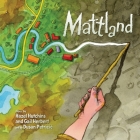
Hutchins, H and Herbert,G. Mattland. Toronto: Annick Press, 2008.


            In this interesting picture book, from Canada, the text is sparse. The illustrations by Dusan Petricic, are wonderful, and in my opinion, carry the book. The subject is the timeless story of moving to a new neighborhood and finding friends. Interestingly, the reader only sees the main character through shadow and reflection. This technique lets the reader identify with the main character who feels overlooked and invisible.

            The illustrations change from dull and muddy, to green, to lush and rainbow bright as children build an imaginary city from “scattered building scraps” and recycled materials. As the story continues, the illustrator uses white space to create room for text just as the children in the neighborhood make room for their new friend. The children build and rebuild the imaginary city while they build real friendships. Best for children 3-6, Mattland is an excellent read aloud choice for pre-school and kindergarten educators who want to address acceptance and welcoming attitudes in their new classroom communities. Just give plenty of time for the illustrations to sit before you turn the page.


Shop Indie Bookstores

Recent Reads

Recently, much of my time alone has been spent working on my freelance writing or reading. Here is a short list with brief notes and thoughts.
Papertowns: This brandy new young adult release from Co-King of Nerdfighteria, John Green debuted on the New York Times Bestsellers list. (With a little help from his brother, Co-King Hank Green and a whole lot of help from the nerdfighters.) Q, the main character, while journeying to find his missing next door neighbor, Margo, also goes on an existential journey to find himself. What do we project to the world? Who are we under our projections? Do we really know the people we call our friends? What are we capable of? How are we connected? Q, tackles all of these questions as he explores a clue that Margo left behind. "Leaves of Grass" by Walt Whitman. John delivers a smart mystery (both the clues and the structure) and his grasp of modern young adult technology and dialogue is spot on. 

Jeremy Fink and the Meaning of Life, Wendy Mass: Jeremy Fink also has an existential journey to find out the meaning of life and his place in the world. Jeremy’s father sends him a locked box on his 13th birthday that holds the meaning of life. The problem? Jeremy’s dad died five years ago and the keys are missing. Jeremy and his best friend go on a path that intersects with interesting people and forces them to look at the importance (or irrelevance) of things. This book is best when Mass introduces us (and Jeremy) to interesting characters but I had a hard time believing the structure of the mystery. Without spoiling, it seemed that too many adults were involved in helping Jeremy make the discoveries that were necessary.

The Guernsey Literary and Potato Peel Pie Society: There are few Holocaust/World War II books that I would characterize as light but this is one of them. Let me explain that by light I don’t mean slight or funny but hopeful and accessible. This book is told at the end of the war in letters from a London writer, Juliet Ashton, to her publisher and the inhabitants of Guernsey Island. Their trials and tribulations are made light by Juliet’s positive spirit and the amazing island community into which she is adopted. Readers be warned: there are tears involved. The book was written by Marianne Shaffer who died earlier this year and the task to complete the book was take on by Anne Barrows. A huge thank you to kellyrfineman for reviewing this book and bringing it to my attention. Perhaps she’ll post the link to her review in the comments. There is a video interview with the one of the author’s here.

Audio Books:

Rowan Hood, Nancy Springer: An English adventure is made even more believable with the narration of Emily Gray. Rowan is the daughter of Robin Hood. That is what she’s always been told by her magical mother. But is she? In this swashbuckling coming of age tale, Rowan (Rosemary) reconnects with the spirits of the Earth, the Alpha, and taps her inner strength to become a true outlaw. 

The Subtle Knife, Philip Pullman: Perhaps I am the only one to come so late to the His Dark Materials series but I am truly enjoying it. As any good second in a trilogy, (for movies think Empire Strikes Back or Dead Man’s Chest (Pirates of the Carribean)) The Subtle Knife takes us deeper into the characters and defines the hero’s journey more clearly. It also leaves us with an ending that is less than satisfying but leads us deftly into the third book (The Amber Spyglass) and into the inevitable battle. Pullman introduces worlds upon worlds that all have their own set of rules and characters. This full cast recording was fabulous. The voices help you keep the worlds distinct and also make the listener’s imagining more vivd. 

What are your reading?